
 Growing Jobs
Apple Unveils Touchscreen MacBook, Embracing a Feature Steve Jobs Once Banned
Key Elements
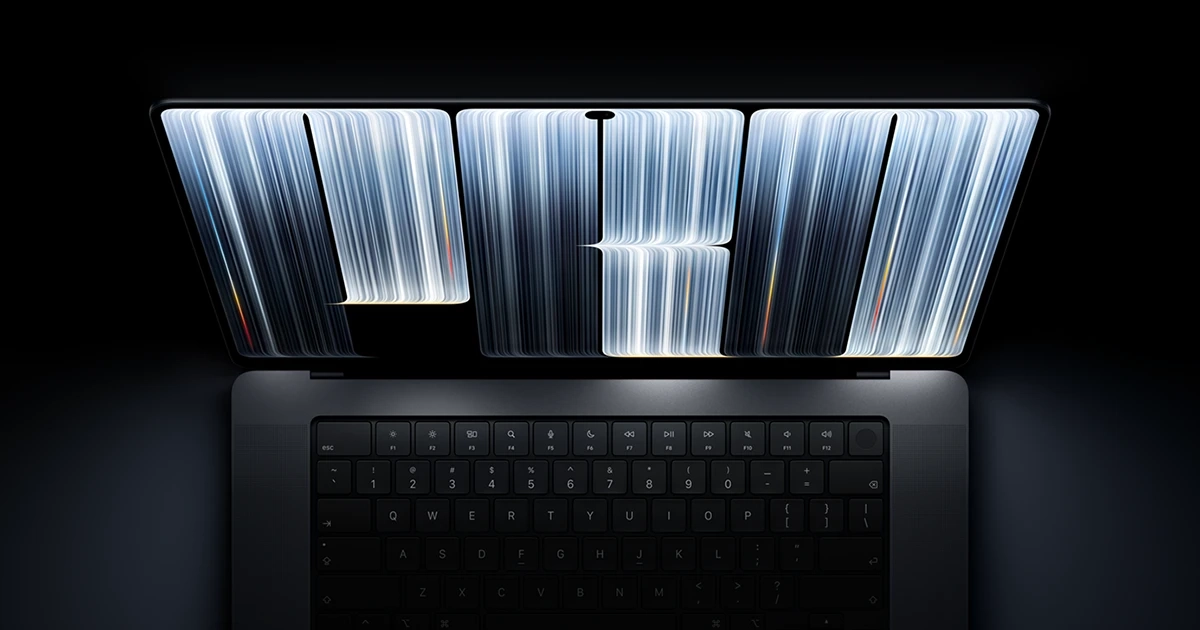
Apple has introduced its first touchscreen laptop, a product its founder Steve Jobs strongly opposed during his lifetime. In doing so, the company has broken, after 16 years, a symbolic taboo of the product philosophy Jobs established. From the recently unveiled touchscreen-equipped MacBook Pro to the iPhone Duo, its first foldable iPhone with Apple Pencil support, the executives who succeeded Jobs are one after another crossing lines their founder once drew.
The most symbolic change is the touchscreen MacBook. In an October 2010 presentation, Jobs flatly declared, based on user testing, that touchscreen laptops don't work properly. "It looks great when you demo it, but after a while you start to fatigue, and after an extended period of time, your arm wants to fall off," he said. "It doesn't work. It's ergonomically terrible." His logic was that keeping your arm extended to repeatedly touch a screen makes long sessions difficult.
That stance persisted after Jobs's death. In April 2012, CEO Tim Cook offered an analogy: "You can converge a toaster and a refrigerator, but those things are probably not going to be pleasing to the user." In June 2018, Craig Federighi, senior vice president of software engineering, pushed back as well, saying that "reaching up to touch a screen is quite tiring."
But the new leadership saw things differently. CEO John Ternus explained that "the Mac is still a device that uses a keyboard and trackpad. It's just that it's now polished enough that you can touch the screen too." In other words, Apple solved the technical challenge of adding touch functionality without increasing weight or thickness.
The expansion of Apple Pencil support follows the same pattern. At the January 2007 iPhone launch event, Jobs sharply criticized the stylus. "Who wants a stylus? You have to get 'em, put 'em away, you lose 'em. Yuck. Nobody wants a stylus," he said. His view was that the finger is the most natural input tool, and that a pen requiring separate carrying is ill-suited to smartphones and tablets. Walter Isaacson's biography also recounts a remark to the effect that "as soon as you have a stylus, the iPad is dead."
Apple already broke this principle in 2015 by introducing the Apple Pencil for the iPad Pro. Now, with Pencil support added to the iPhone Duo, its first foldable iPhone, the shift has extended to smartphones. Analysts say the door is open for support to broaden to other iPhone models in the future.
The foldable iPhone itself is far from Jobs's tastes. During his lifetime he was skeptical of large-screen smartphones and in particular believed 7-inch-class products would struggle to succeed. But the iPhone Duo's inner display reaches 7.6 inches when unfolded—the opposite direction from the early iPhone philosophy of being comfortably usable with one hand when folded. Its outer screen is wider than an ordinary smartphone's while its inner screen is smaller than an iPad's, prompting criticism that its identity is ambiguous, fitting fully into neither category. The folding crease at the center of the screen is also hardly a design element Jobs would have favored.
This is not the first time Apple has moved beyond its founder's principles. Jobs panned 7-inch tablets in 2010, saying users would have to "sand down their fingers" to use them, but Apple released the 7.9-inch iPad mini in October 2012. In its first weekend on sale, the iPad mini and the fourth-generation iPad combined sold 3 million units, setting an iPad sales record at the time. On large-screen smartphones, Jobs said devices too big to hold in one hand wouldn't sell, but Apple introduced 4.7-inch and 5.5-inch screens with the iPhone 6 and iPhone 6 Plus in 2014, selling more than 10 million units within three days of launch.
The shift continued in pricing policy and revenue models. Jobs said in 2008 that "we don't know how to make a $500 computer that's not a piece of junk," but Apple in March this year launched the MacBook Neo, a budget laptop priced at $599 ($499 with an education discount). In the music market, Jobs said in 2003 that "consumers like to own their music, they don't like to rent it," but Apple launched subscription-based Apple Music at $9.99 a month in 2015. According to a 2024 estimate by Statista, Apple Music has about 95 million global subscribers.
Behind these changes lie shifts in technology and the market environment. In 2011, the year Jobs died, Apple's annual revenue was about $108 billion (approximately 145.1 trillion won); by fiscal 2025 it had grown to $416.2 billion (approximately 559.1 trillion won). The services segment alone exceeds $100 billion (approximately 134.3 trillion won), more than Apple's entire revenue at the time of Jobs's death. Analysts say the chip design, global supply chain, and software platforms built under Tim Cook have become the foundation for turning product categories once abandoned over cost and marketability concerns back into businesses.
For investors, the key question is whether these changes translate into actual sales. Since both the touchscreen MacBook and the foldable iPhone are segments Apple is entering for the first time, demand at premium price points and initial production yields are expected to be the variables for profitability. Whether the move to part ways with Jobs's legacy can be proven through results is becoming the test for his successors.